This December, we are thrilled to host our final resident of the year, Swiss-Haitian multidisciplinary artist Sasha Huber, as she undertakes a four-week residency at G.A.S. Lagos. Based in Helsinki and internationally recognised for her research-driven practice, Sasha works across performance, video, photography, and collaborative interventions to explore the politics of memory, care, and belonging in relation to colonial histories. Central to her practice is the staple gun—a tool she reclaims from its violent associations to propose possibilities for repair, symbolically stitching together wounds and challenging contested narratives. Working with archival materials and layered processes, she creates reparative gestures that connect past and present.
During her residency, Sasha will develop a commemorative portrait of pioneering curator Bisi Silva, founder of the Centre for Contemporary Art (CCA), Lagos. The work, created in honour of Bisi’s enduring influence on artistic and curatorial practice across the continent, will be gifted to CCA as a permanent gesture of remembrance. Sasha and Bisi first met in the early 2000s during a residency in Helsinki and stayed in contact until Bisi's passing. While in Lagos, she aims to deepen her understanding of the city’s artistic networks through studio visits, conversations with local artists, curators, as well as research at the G.A.S. Library and Picton Archive. She will also work closely with CCA to further contextualise the portrait, participate in the closing programme of Owu. Fil. Faden. Thread. and visit significant sites including the G.A.S. Farm House, the Badagry Slave Route, and the Osun-Osogbo Sacred Grove. Additionally, Sasha hopes to connect with artist and G.A.S. Trustee Temitayo Ogunbiyi, as well as Ajoke Silva, sister of the late Bisi Silva, to further ground the project in the relationships and histories that shape its meaning.
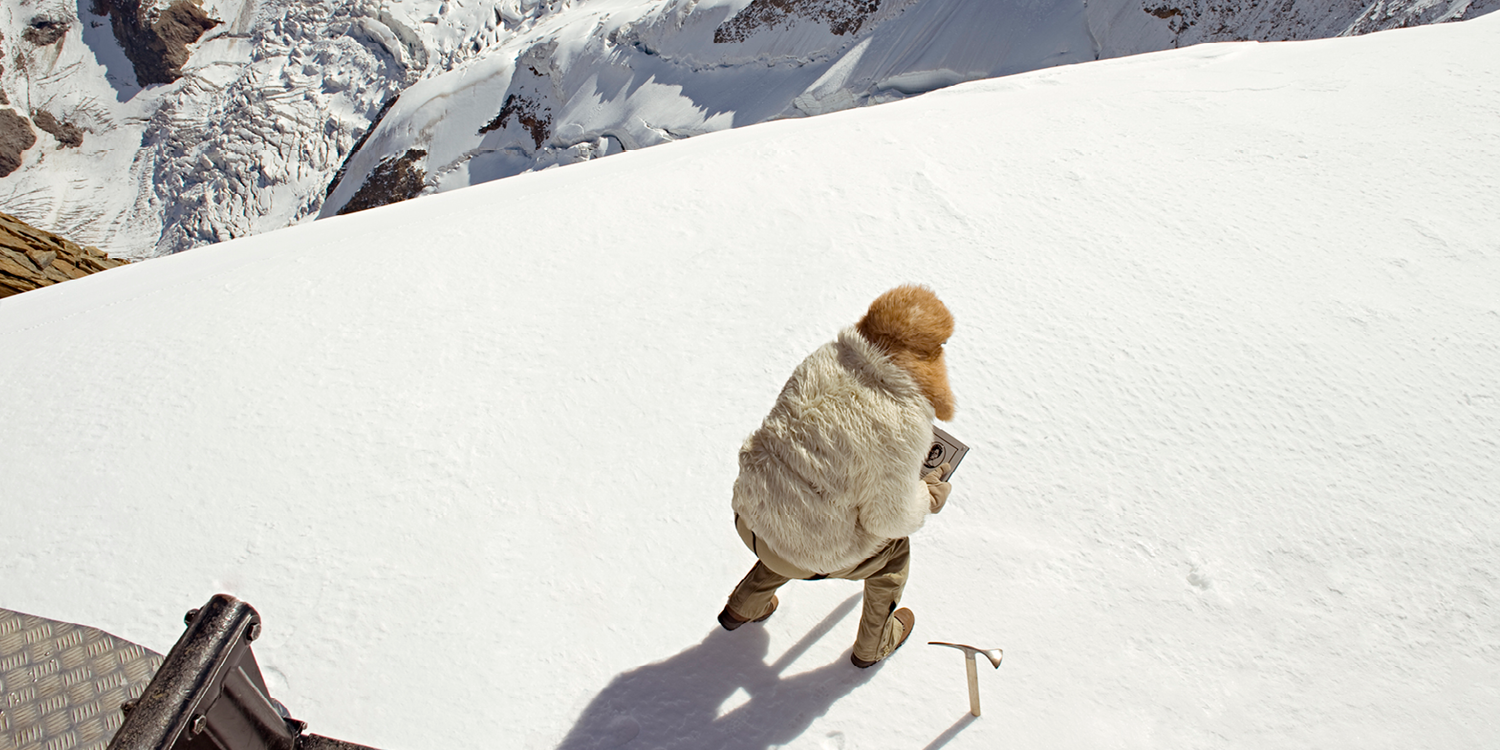 Sasha Huber, Rentyhorn, 2008. Courtesy the artist. Photo: Siro Micheroli.
What is the current focus of your creative practice?
In my ongoing practice, I focus on art and research to confront, repair, and reinterpret colonial histories and their lasting impacts on people and environments, often through collaborative and site-specific approaches.
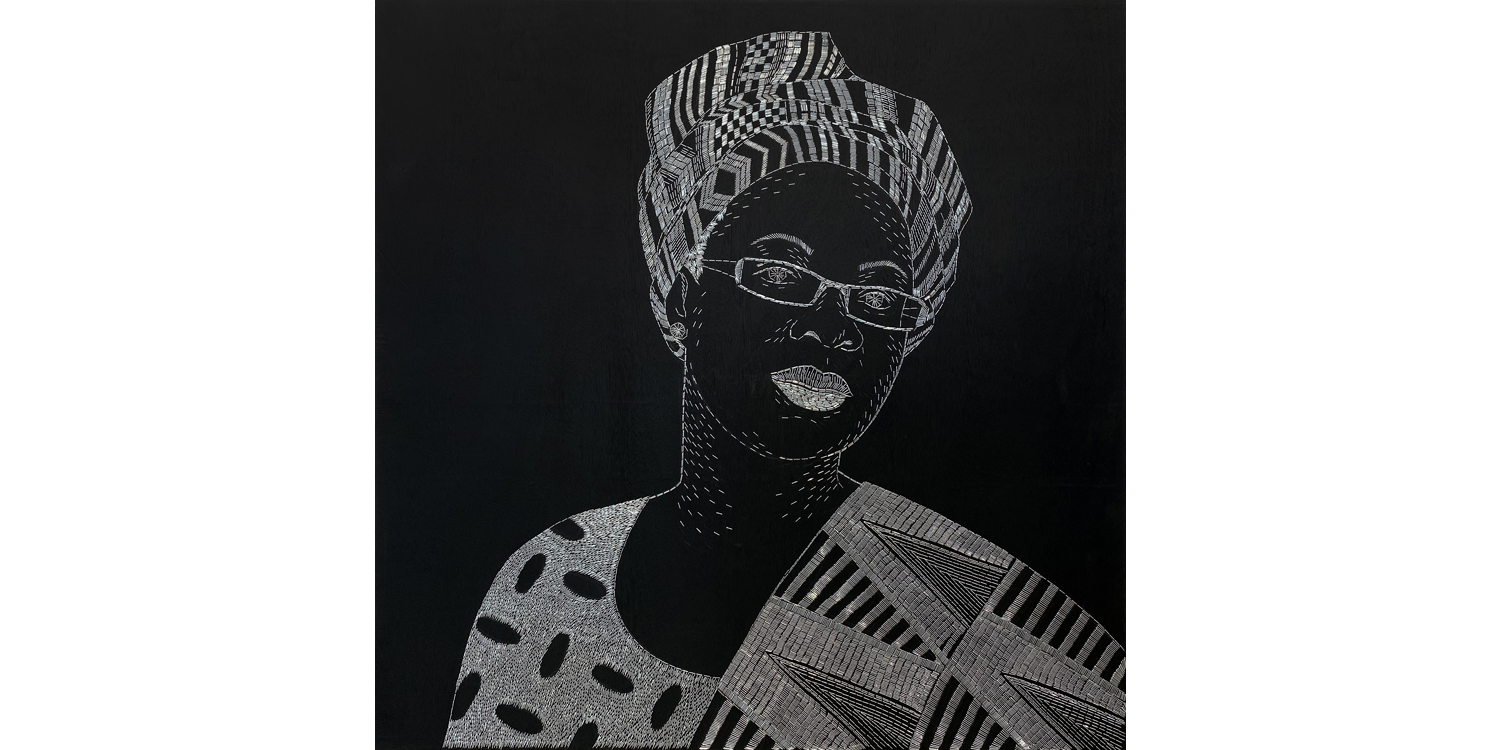 Sasha Huber, The Firsts - Bisi Silvia, renowned and pioneering curator, and founder of the Centre for Contemporary Art, Lagos. 2025.
What drew you to apply for this residency and how do you think it will inform your wider practice?
I was drawn to Lagos through my connection to the late curator and pioneer, Bisi Silva. When I was introduced to G.A.S. through Sustaining the Otherwise, a collaborative research and artistic project on restitution, reparation, and transformation, taking place across multiple locations over several years, I knew that I would like to create Bisi’s portrait as part of my ongoing portraiture series The Firsts.
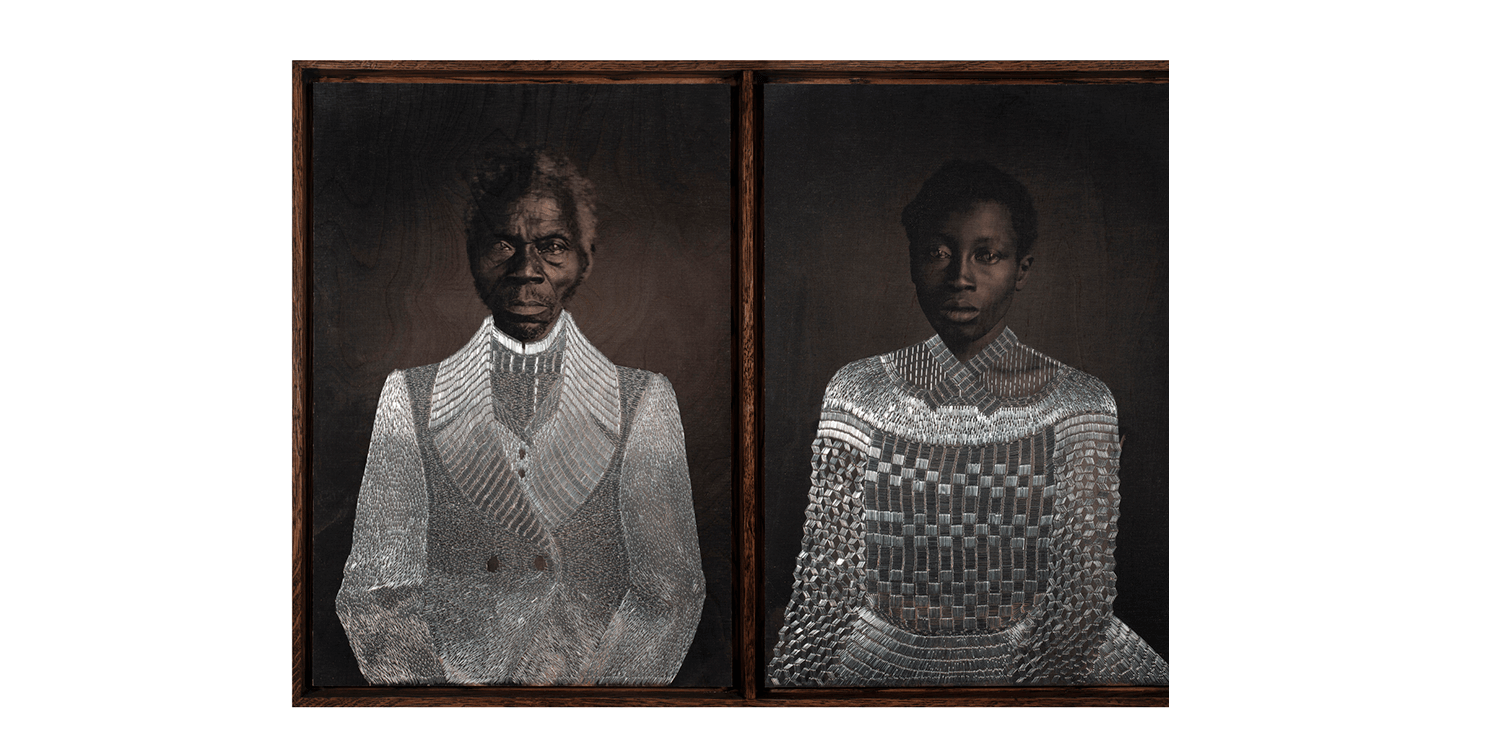
Sasha Huber, Tailoring Freedom - Renty & Delia, 2021. Metal staples on photograph on wood, 97 x 69 cm. Courtesy the artist and Tamara Lanier. Photo: Vesa aaltonen.
Can you give us an insight into how you hope to use the opportunity?
I look forward to connecting with the local art scene, engaging with artists, curators, and cultural practitioners to exchange ideas and build relationships. I also plan to explore the city and cultural sites to gain inspiration and context for my work. I am also going to spend time in the incredible G.A.S. Library to work on my research. Central to my residency is creating a commemorative portrait of the late Bisi Silva, whose contributions to contemporary African art continue to resonate. I also want to use this time to experiment with new approaches and styles in my practice.
RESIDENCY ARCHIVE
Event: On Remembering
Event Date: 17th December, 2025
As her residency concluded, Sasha unveiled the portrait during the 18th anniversary of the Centre for Contemporary Art, Lagos (CCA Lagos), on December 17th, 2025. Founded in 2007 by Bisi Silva, CCA Lagos was established as a platform for contemporary Nigerian visual arts and culture. Over time, it has grown into an institution that continues to shape artistic practice across the continent. The day featured a number of panel discussions and events. Sasha’s part of the evening began with an introduction by Ajoke Silva, Bisi Silva’s sister, who shared her connection to her sister, and introduced Sasha and her project. Sasha reflected on how she and Bisi met, the ideas they exchanged, and the inspiration behind her book You Name It, which brings together her artistic practice and activism. She also spoke about the importance of sharing Bisi Silva’s legacy through projects such as The Firsts.
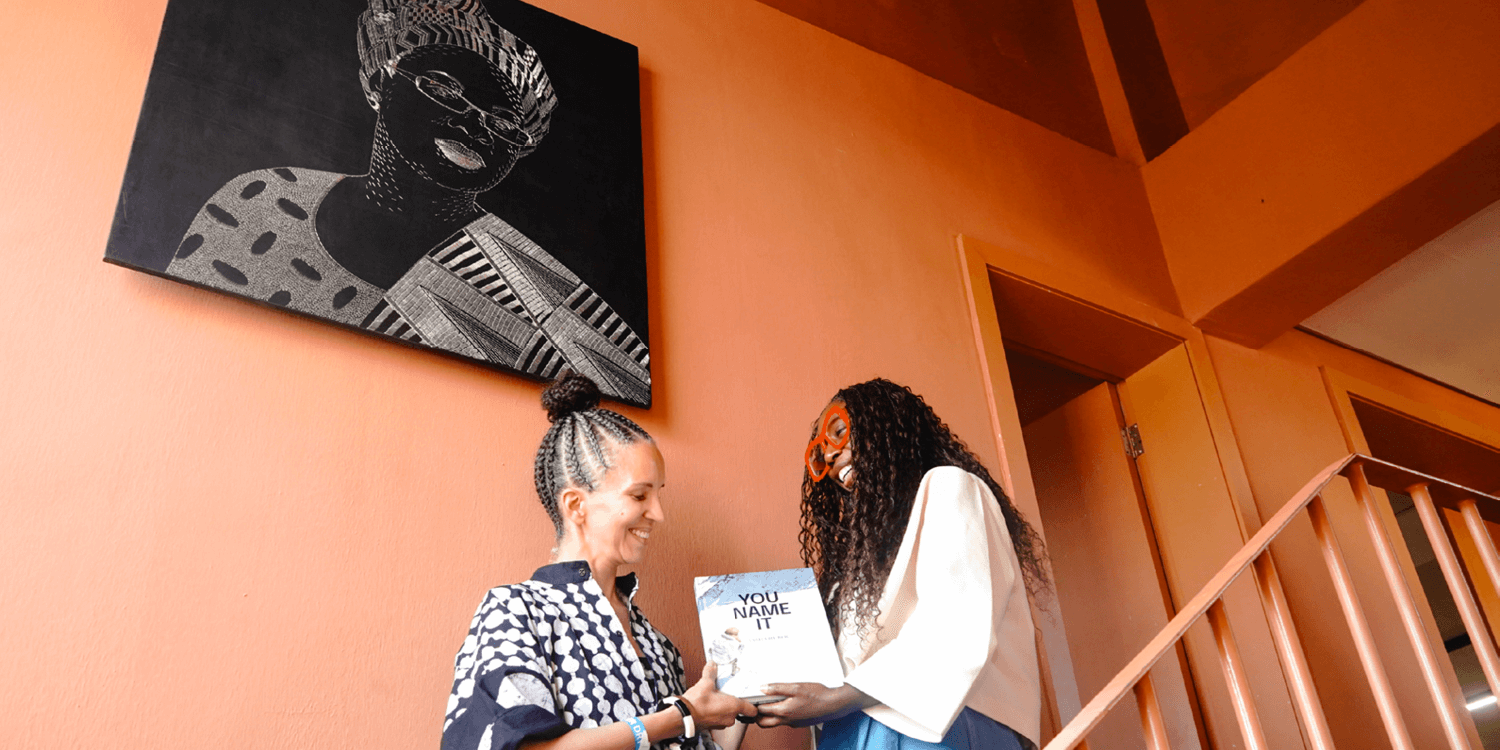 Sasha Huber with Oyindamola Fakeye, director of CCA Lagos in front of Bisi Silvia portrait on December 17th 2025. Image courtesy of CCA Lagos. Photographer: Bem Tilley-Gyado.
About Sasha Huber
Sasha Huber is a Helsinki-based visual artist of Swiss-Haitian heritage whose work explores the politics of memory, belonging, and care in relation to colonial legacies. Bridging history and the present, she engages with archival material through a layered practice spanning reparative interventions, film, photography, and collaboration. Known for using a staple gun—a tool symbolically resonant as both weapon and means of repair—it becomes a method of stitching together colonial wounds. Huber holds an MA in visual culture from Aalto University in Helsinki and is currently pursuing a practice-based PhD in artistic research at Zurich University of the Arts. From 2021 to 2024, her touring exhibition You Name It, organized by The Power Plant Contemporary Art Gallery in Toronto in collaboration with Autograph in London, marked a significant chapter in her ongoing international practice and was accompanied by a monograph of the same title, published by Mousse Publishing.
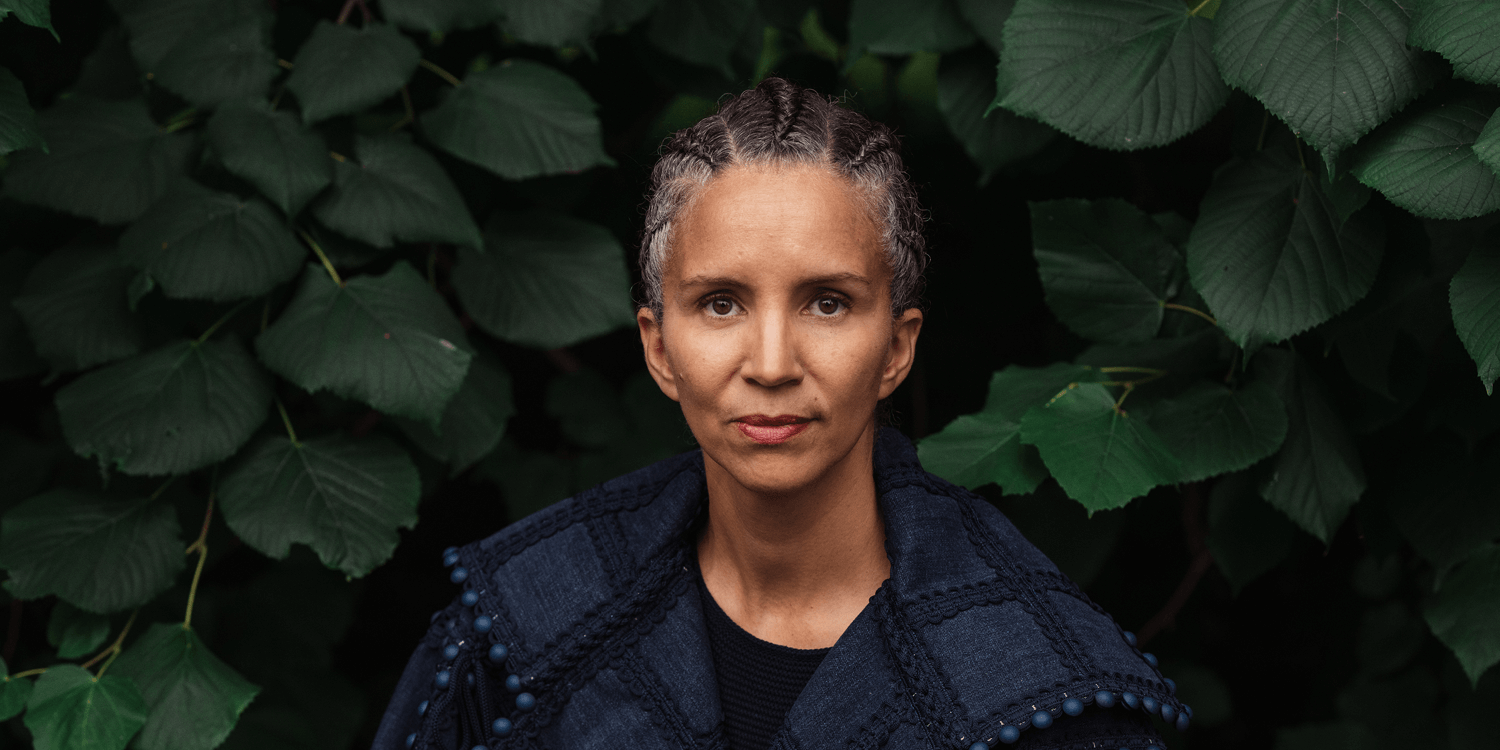 Portrait of Sasha Huber. Photo: Kai Kuusisto.
Sasha's research residency is developed and organized in the context of a collaboration between Sustaining the Otherwise and G.A.S. Foundation. Sustaining the Otherwise is a collaborative research and artistic project about restitution, reparation and transformation, taking place in multiple locations over several years.
Sasha's research trip is also supported by Pro Helvetia Johannesburg and Frame Contemporary Art, Finland, while her artistic work is supported by the Arts Promotion Centre, Finland.
