This week, we welcomed Afsian Aguilar, an Israeli multidisciplinary artist of Filipino and African immigrant descent, to G.A.S. Lagos for an eight-week residency. Working across painting, sculpture and installation, Afsian’s practice explores identity, memory and belonging. His works construct symbolic and dystopian landscapes that reimagine biblical narratives, sculptural objects and histories connected to place.
During his residency, Afsian will focus on developing his skills and expanding his approach to painting. He plans to experiment with batik-inspired fabrics, collage, and painting-installation techniques to create immersive and imaginative worlds within his work. He also hopes to reconnect with his African roots through ideas, materials, and methods of making, while giving himself the freedom to take creative risks. As part of this research, he is interested in sourcing African fabrics and returning to painting on a larger scale. He also looks forward to engaging with fellow residents and artists in Lagos, and visiting museums, galleries, beaches and hair-braiding parlours as part of his wider exploration of the city and its creative and cultural life.
Afsian's residency is generously supported by Artis. To find out more about supporting G.A.S. Foundation, click here.
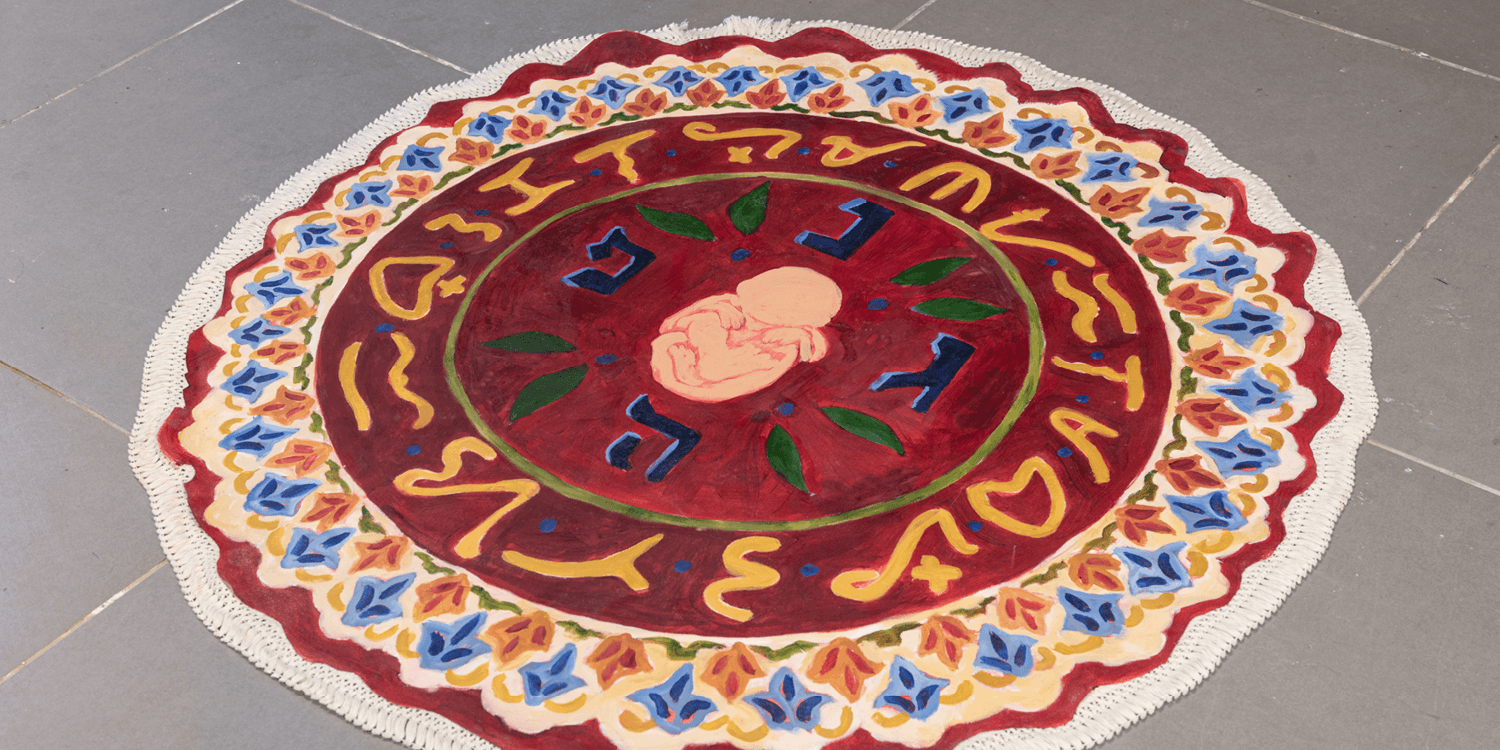 Birth Wombs (נס גדול היה פה), 2025 Variable size Oil on Canvas. Photo: Pavel Dmitrochenko.
What is the current focus of your creative practice?
The current focus of my creative practice is understanding where I am, both physically and artistically. The concept of home or the question of “where is home?” is a recurring theme throughout my work. I am interested in exploring how we navigate the places we inhabit, how we survive within them, and how our bodies respond to environments marked by uncertainty, displacement, or instability. Questions such as what happens to the body when it exists in a constant state of fight-or-flight continue to drive my research and artistic inquiry.
While I work across different mediums, my current focus is on developing a deeper relationship with painting. I am interested in how painting and installation can become a space for negotiating identity, memory, and belonging. Through brushwork, collage, fabric, and installation elements, I seek to build layered visual worlds that reflect both personal and collective experiences of home. Ultimately, my practice is an ongoing search for place, connection, and self-understanding, using painting and installation as the primary language through which these ideas can unfold.
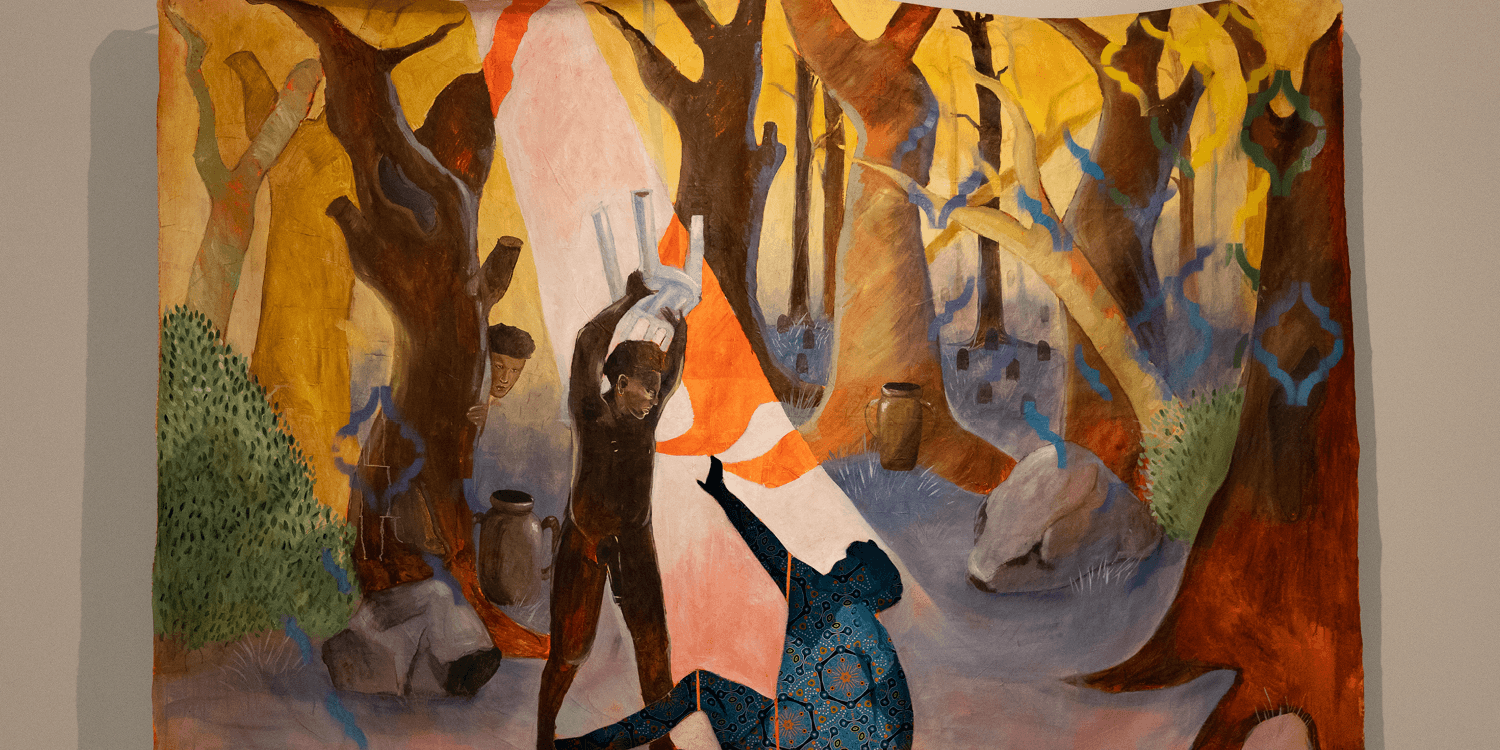 If Only The Light Knew, 2024. Photo: Pavel Dmitrochenko.
What drew you to apply for this residency and how do you think it will inform your wider practice?
What initially drew me to this residency was the opportunity to engage with the work of Yinka Shonibare, whose practice has been a significant source of inspiration for my own artistic development. His exploration of identity, history, culture, and belonging has greatly influenced the way I think about my work and the questions I continue to investigate through painting and installation. Beyond this, I am deeply interested in the opportunity to spend time in Nigeria. As someone with Nigerian roots, I see this residency as a rare opportunity to explore a part of my heritage more closely and develop a deeper understanding of my relationship to place, identity, and home. These themes already form the foundation of my practice, and I believe that experiencing Nigeria firsthand will provide new perspectives that can enrich and challenge my work. I anticipate that these experiences will influence not only the content of my work, but also the ways in which I approach painting, materiality, and storytelling in the future.
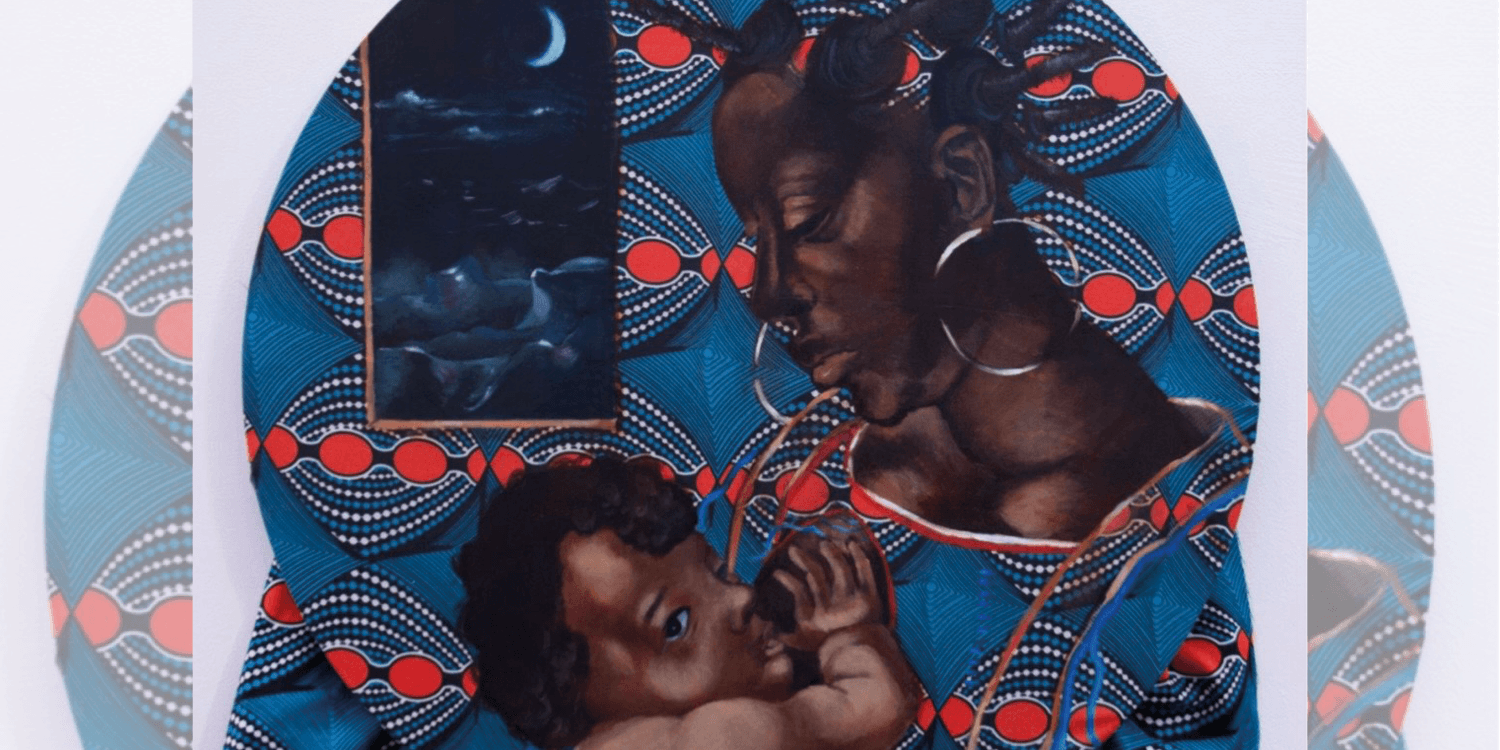 My Roots and I, 2022, Oil on Batik Fabric, wax-resist. Courtesy of the artist.
Can you give us an insight into how you hope to use the opportunity?
I hope to use this opportunity as a period of focused research, experimentation, and artistic development within my painting practice. My intention is to fully immerse myself in the residency environment, allowing the shift in context, surroundings, and cultural experience to inform new ways of thinking and making. I plan to use the time to develop a body of work that explores themes of home, identity, and the body, which are central to my practice. Through painting, collage, and the use of fabric and installation elements, I aim to push my work further into more layered and immersive visual forms. Alongside the studio work, I hope to engage with the local environment and community as a source of inspiration and exchange. I am interested in how direct experience and interaction can influence both the conceptual and material aspects of my work.
About Afsian Aguilar
Born on August 3, 2002, in the Land of Milk and Honey, Afsian Aguilar Ibura (24) is an adopted child of Filipina and African immigrant descent. His biological mother is Filipina, and his father is an African-American Jew. Raised in his adoptive parents’ home, Afsian developed a deep love for both the arts and sciences. He grew up speaking only English and attended Tabeetha School, a private English-speaking school in Jaffa, where his artistic passions flourished. In 2020, he began his first degree at the Bezalel Academy of Arts and Design. Today, Afsian is a full-time artist based in Tel Aviv and works part-time as an educator for children. Afsian is currently doing his Master’s degree in the Arts at Bezalel Academy.
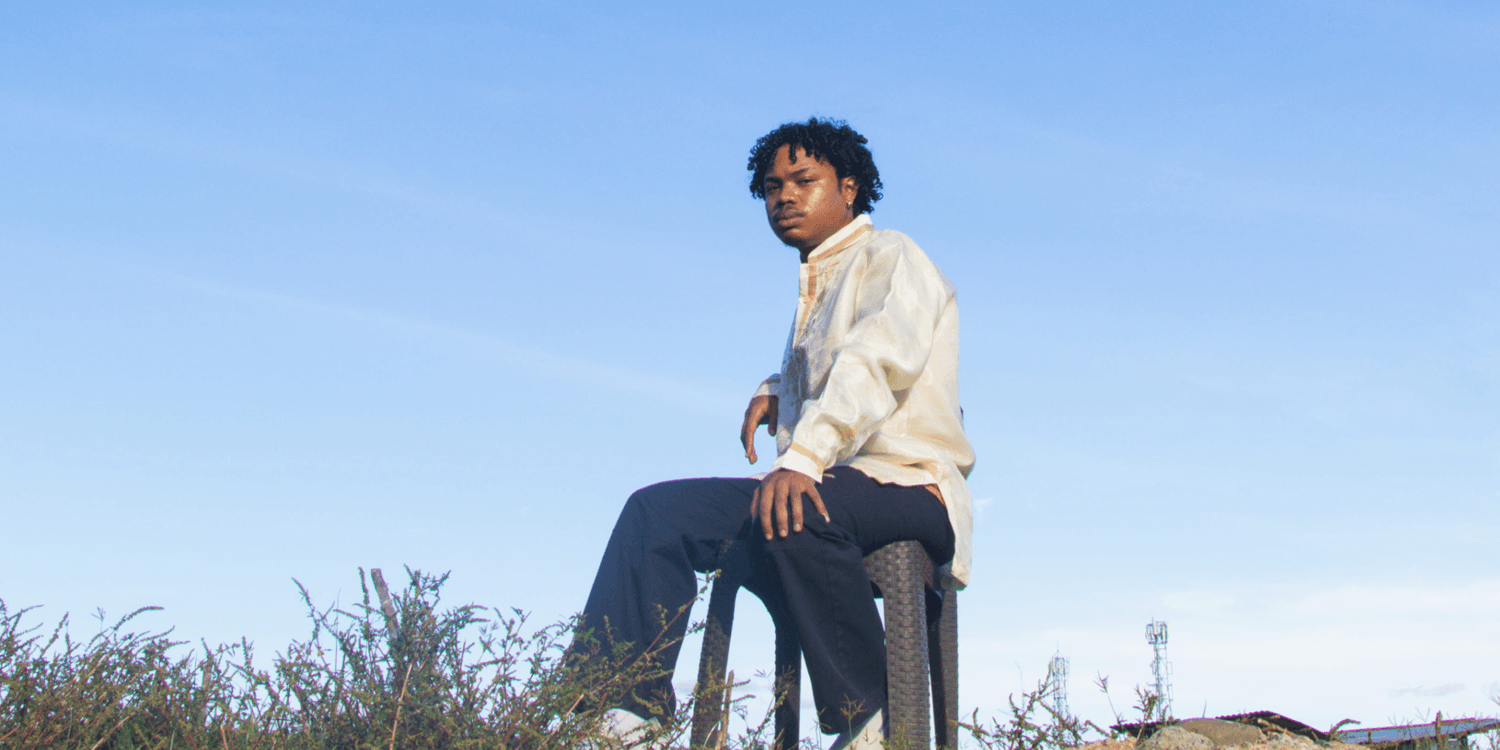 Photo of Afsian Aguilar. Photo: Mark Taberna.
